March 28, 2026
How to market a landmark office building (and why it's different than newer buildings)
Strategic insights for character buildings

Most owners of landmark office buildings make the same mistake: they try to compete with glass towers on the tower's terms. When you market your 1920s limestone beauty like it's a spec building in Hudson Yards you're fighting a rigged race.
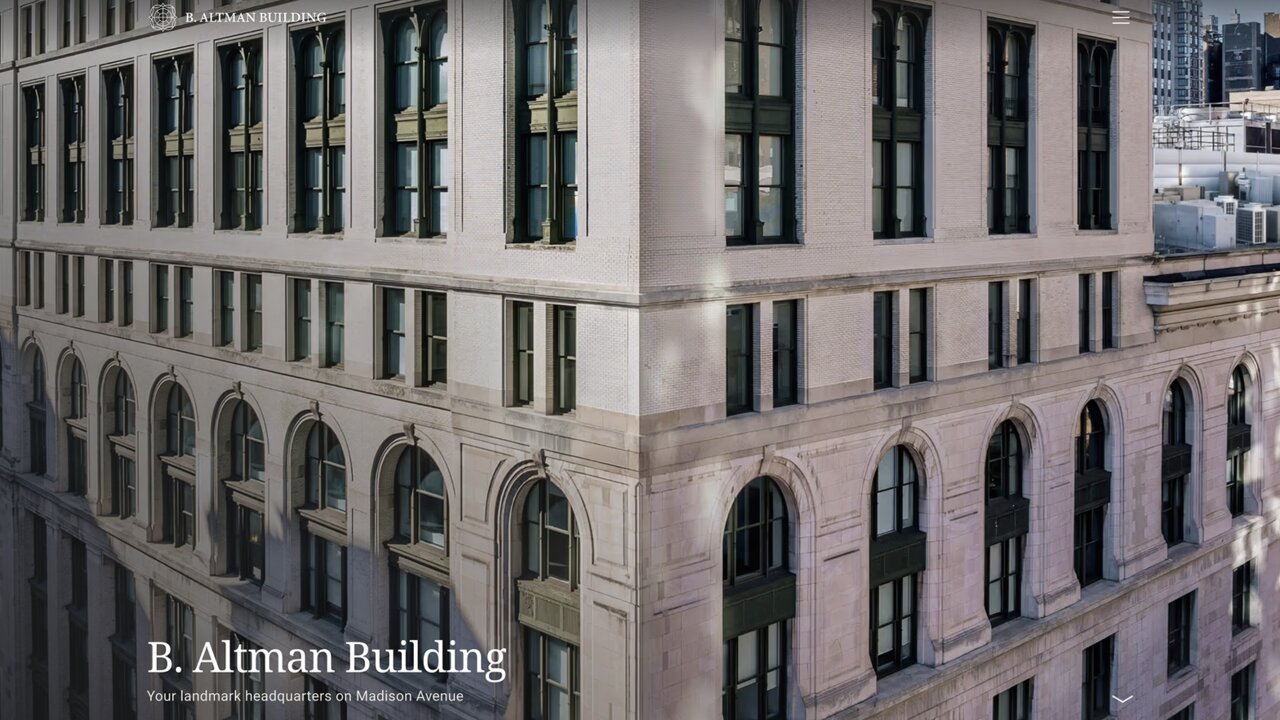
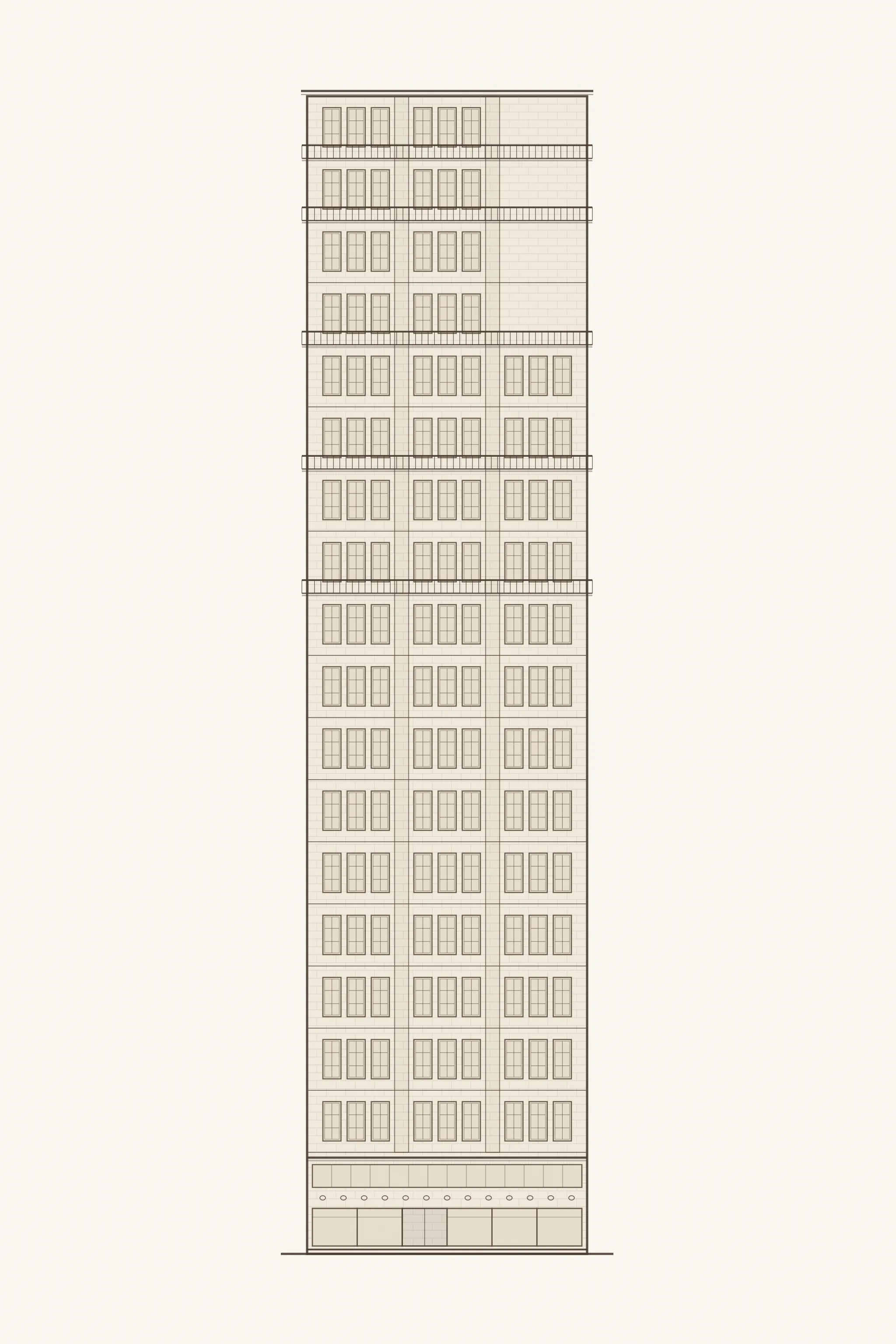
We learned this when we created the branding website for the B. Altman Building, a building with a hand-carved limestone facade, roman columns and huge arched windows. If we tried to fight the Class A glass towers head on - we were bound to come up short.
So instead of trying to compete on specs, we decided to compete on story.
Stop fighting the wrong battle
When you market a landmark building like general office space, you lose before you start. Your building can't win on column spacings or green certifications. It shouldn't try to.
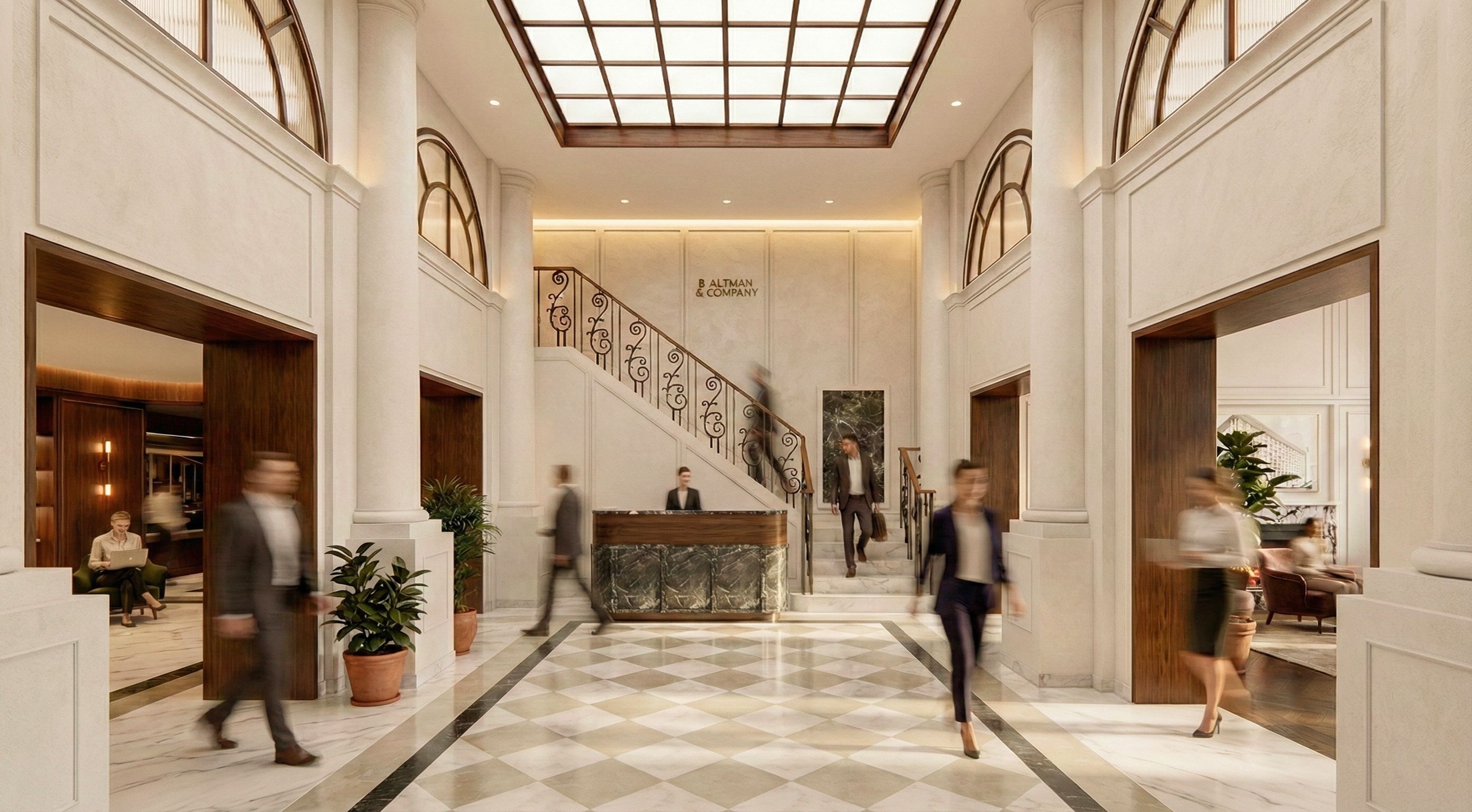
Smart owners recognize they're not in the commodity office game. They're in the differentiation business. Your pre-war building with its marble lobby and hand-crafted brass rails offers something no glass tower can replicate: authentic character that money can't buy in new construction.
When you stop asking "How can we compete with newer buildings?" and start asking "What can we offer that newer buildings can't?" - you find your competitive advantage.
Why landmark buildings attract different tenants
The tenants who thrive in landmark buildings aren't looking for what everyone else offers. They fall into two clear profiles: established firms aiming to project class and creative companies trying to signal that they're different.
Established firms choose landmark buildings to communicate their heritage and stability. A century-old law firm or wealth management company wants their headquarters to reflect their gravitas. They're not as impressed by sleek lobbies and modern amenities. They want the kind of presence that only comes with age and architectural significance.
Creative firms pick landmark buildings for the opposite reason. They want to distance themselves from corporate sameness. An advertising agency or design studio choosing your building with exposed brick and original details is telling their clients they think differently. The building becomes part of their brand story.
Both tenant types share one crucial trait: they'll pay premiums for authenticity that supports their positioning.
Finding your "1 of 1 tenant"
Your "1 of 1 tenant" is the prospect who specifically wants what your building offers. Not someone who'll settle for it, but someone who seeks it out. And will pay a premium when they find it.
These tenants exist, but you have to know how to spot them. They ask different questions during tours. Instead of focusing on parking ratios or conference room availability, they notice architectural details. They talk about their company culture or client perception. They understand that their space choice communicates something important about their business.
When you know your ideal tenant profile, you can design your entire marketing approach around attracting them. You stop wasting time on prospects who will never value what you offer. This precision transforms your leasing strategy from spray-and-pray to surgical strikes.
How smart owners tell their building's story
Marketing a landmark building isn't bombarding them with amenities. It's about creating a narrative that resonates with tenants who value character.
Start with your building's history, but connect it to today's business needs. Don't just mention the architect - explain how the original design creates an inspiring work environment that newer buildings can't replicate. Those soaring ceilings and oversized windows weren't just aesthetic choices. They create the kind of space that makes employees proud to come to work. And the client appreciate the firm more.
The most effective landmark building marketing focuses on the experience of being there. Instead of specs and efficiency, smart owners emphasize the impression clients get walking through that marble lobby or the way natural light fills those corner offices with original casement windows.
Qualifying prospects who actually pay premiums
The final piece is learning to qualify prospects quickly. You want to identify the companies that will value and pay for what your building offers, not those shopping purely on price per square foot.
Listen for language that reveals their priorities. Prospects who mention company culture, client impressions, or wanting to "make a statement" with their space are worth pursuing. Those focused exclusively on infrastructure and innovation probably aren't your ideal tenants.
When you find the right tenant, they don't negotiate your landmark building down to commodity pricing. They pay premiums for the authenticity and character that newer buildings simply cannot provide.