April 12, 2026
How a great neighborhood map helps you close more deals
Better maps, more leases

The three rules of real estate (location, location, location) are also true for office space. Executives understand that, so they put a lot of effort into understanding the different submarkets before making a decision. And every building on their shortlist gets further scrutiny.
They want to understand the benefits of the location. Transportation, food options, coffee shops and other venues that are critical for a good office experience. But most office building websites and brochures make this harder for them than they should.
I see the same problem everywhere: maps that show either too little (a lonely pin on an empty street) or too much (a cluttered mess of every nearby business). Both approaches cost you deals. When decision-makers can't quickly grasp your location's benefits, they move on to buildings that make the case more clearly.
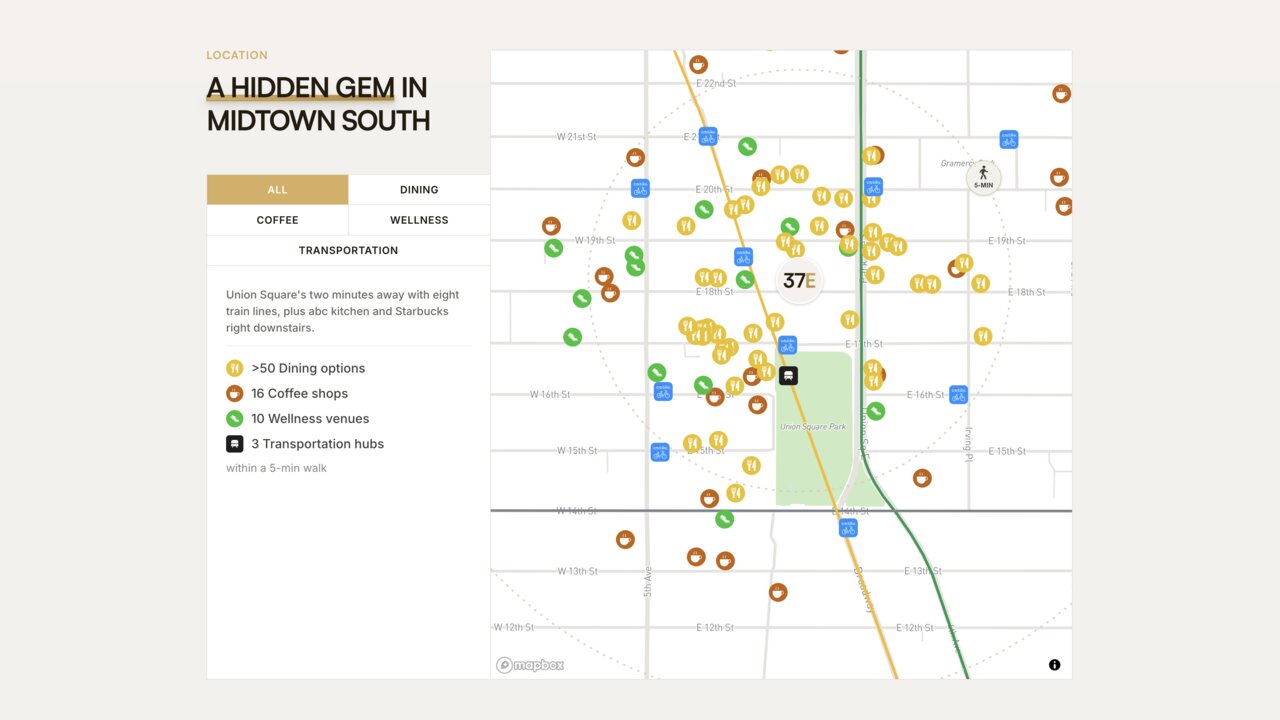
That's why we at Trophy have developed what we think is the best office leasing map in the world. This article breaks down this map's design principles and explains why thoughtful map design can drive leases.
The hidden cost of poor neighborhood maps
Most building websites treat neighborhood maps as an afterthought. You get a basic Google Maps embed with a single pin, maybe a few restaurant markers thrown on top. The result tells you where the building is, but not much more.
This becomes a problem when tenants try to gauge if your location works for their team and try to build internal consensus. The CEO worries about commute times. The sales people can't find lunch options. HR questions whether employees will be happy there.
These concerns don't always get voiced, but they can kill deals in internal meetings. A poorly designed map forces prospects to do their own research, opening the door for doubt and competitor buildings with clearer location narratives.
What tenant decision-makers actually need
Brokers know Manhattan neighborhoods inside and out. They don't need visual aids to understand that Flatiron has great restaurants or that Union Square offers solid transit access. But brokers don't sign leases.
The actual decision-makers are company executives who might know NYC well or might not. They're evaluating multiple buildings while juggling their day jobs. They want to understand commute options, dining choices, coffee shops for client meetings, and wellness amenities without spending hours researching.
Most importantly, they need to feel confident presenting the location to their teams. A VP recommending office space to their CEO wants clear, compelling reasons why this particular block works better than alternatives. Your map needs to make that case visually.

Five map features that showcase your advantages
Our map solves the decision-maker problem with five specific features. Each one serves a clear business purpose.
- Transportation visualization addresses tenants' biggest location concern. We show subway lines, stations, and walking times because commute convenience drives office decisions.
- Point-of-interest filtering lets users toggle between dining, coffee, wellness, and other categories without visual clutter. They can focus on what matters most to their company culture while keeping the map readable.
- Walk-time tooltips provide practical context that raw distance can't match.
- Synced list and map views serve different browsing preferences: Visitors can skim the list for their favorite places or navigate the map to see where things are in the street grid.
- Pan and zoom capabilities reveal neighborhood context beyond the immediate block. Visitors can understand the broader location and see where the building is relative to other well known locations.
Small improvements that deliver big results
Decisions like office relocation are big and risky. Tenants need every help they can get in making the right decision, and achieving internal consensus on a new location. So small changes like a better map compound into meaningful leasing advantages for the owner.
The goal isn't to win design awards. It's to help prospects understand why your location works for their teams, build the confidence they need to move forward. In a market where most buildings only show bare bones information, clear location storytelling creates real differentiation.
Better maps won't magically fill vacant floors, but they help qualified prospects choose you over comparable alternatives. In today's highly-competitive office market, that edge matters.