July 22, 2026
Why class B building owners have the biggest marketing opportunity in NYC
The biggest marketing opportunity in NYC office isn't where most people are looking.

The investment is already made
If you own a Class B office building in Manhattan, you've probably spent real money on it. Renovation, new systems, upgraded lobby - the kind of work that takes months and costs millions. That investment is the hard part. And it's already done.
What's left is telling the market about it. That last step - the relatively small one - is where most owners stop.
There's a tendency to assume a good building will find its tenants. That if you renovate it properly and price it right, word will get around. That's not entirely wrong. Brokers talk. Buildings lease.
But this assumption quietly costs money: longer vacancies, rents that don't reflect what the building has become, tenants who choose other buildings because they couldn't get a consensus on yours.
Because the building's advantages aren't always obvious or clear at first glance. And can be easily forgotten if the messaging is vague or complicated.
The marketing desert most owners don't see
Here's what the Class B marketing landscape actually looks like: almost nothing. A LoopNet listing, maybe a PDF floorplan, a broker relationship or two. If there's a website, it's often a basic placeholder that was built once and never touched again.
This isn't a knock on anyone. Over decades of operating, many owners have simply never needed to think about marketing. They bought buildings, ran them well, and leased them. That model worked. It still mostly works. So marketing never made it into the mental model as something worth doing.
But that means the category is, for practical purposes, a commodity environment. When brokers search for options and every building presents itself the same way - a few photos, a spec sheet, a rate - the default filter becomes price.
That's why the building that communicates more compellingly stand out and get to become more. The bar is low. That's the opportunity.
What going against the grain actually looks like
Going against the grain here doesn't mean trying to look like a Class A building. That would be the wrong move - and tenants see through it immediately.
Class B buildings have their own distinct appeal: often better locations than people expect, lower rents than Class A, genuine character, flexible layouts.
Owners who know their buildings well already know this. The question is whether they're communicating it - or just hoping tenants and brokers figure it out themselves.
What actually works is straightforward: A real web presence. Clear positioning. A visual identity that reflects what the building is. The kind of first impression that gives a broker something to show a client, or that stops a tenant from bouncing to the next option. None of this requires a giant budget or a long process. It requires someone to make the case for the building - specifically, honestly, and well.

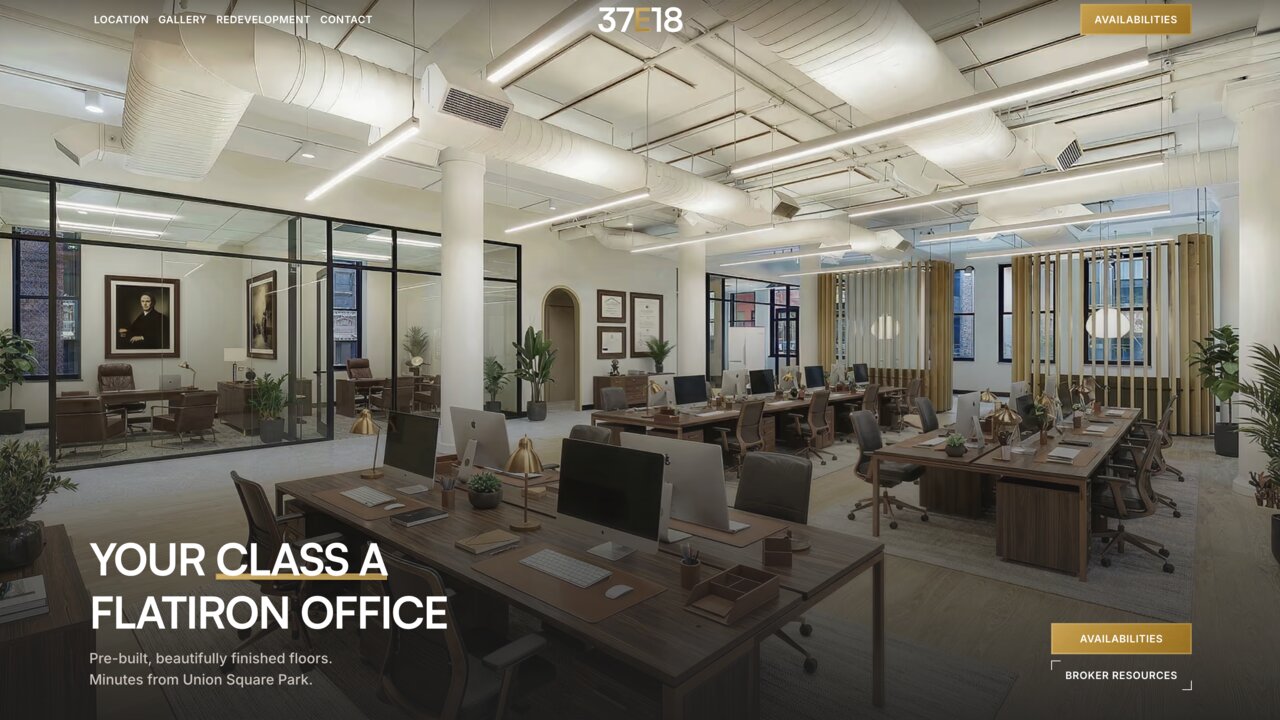
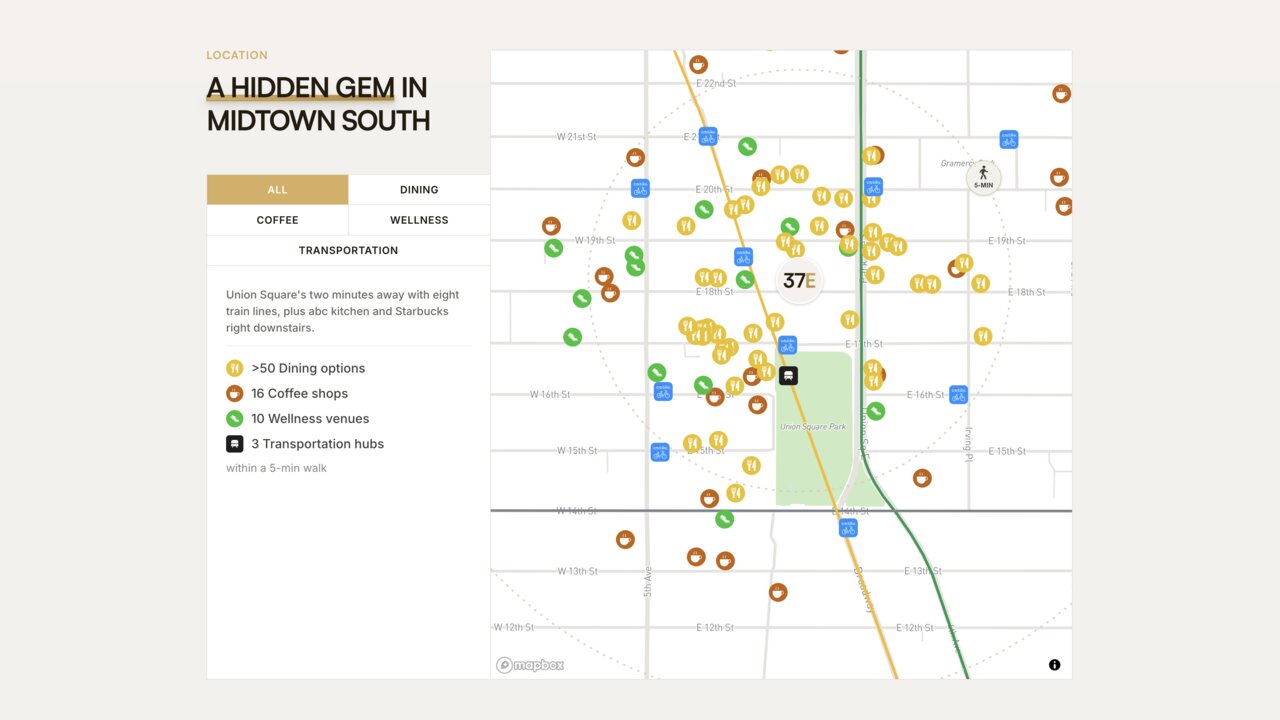
How 37 East 18th Street told its story to the market
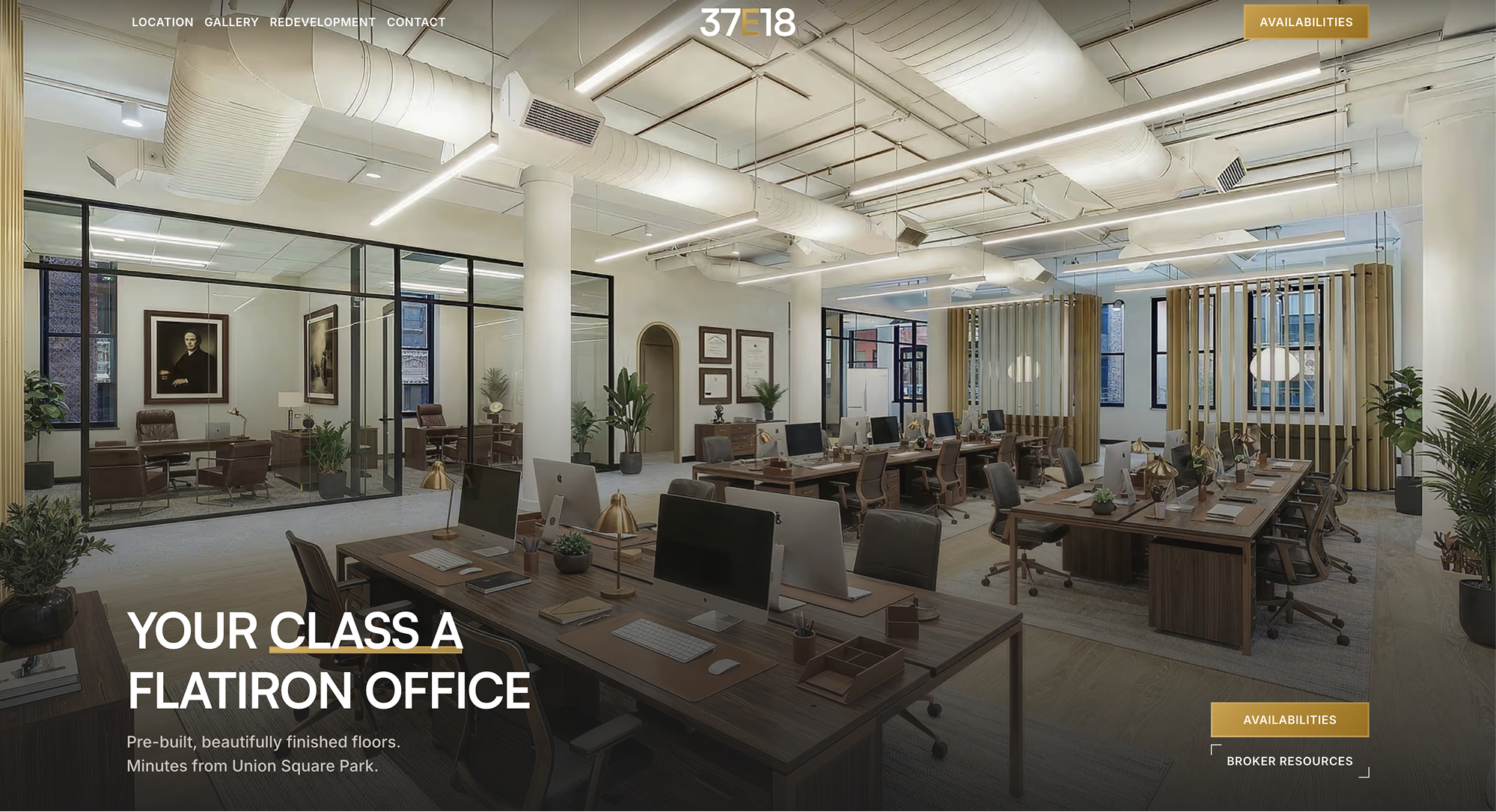
Zar Property went all-out on 37 East 18th Street. They brought in notable architects, invested heavily in finishes, and repositioned the building from the ground up. Internally, they called it "the jewel of the portfolio."
After all of that work, they recognized something: the market didn't know. The building had been transformed, but nothing about its external presence reflected what it had become. Brokers who hadn't been inside recently had no reason to update their impression of it. Tenants searching online would find the same kind of placeholder they'd find for any other building on the block.
So they retained us to build a web presence that matched the building's ambition - one that told the story of the repositioning, made a strong first impression, and gave brokers something worth sending to a client. The physical investment they'd already made was substantial. What they did afterwards was communicate it in a way the market could actually see.
That's the step most Class B owners skip. They go deep on the repositioning itself and then present the result as if the work speaks for itself. But it rarely does.
What a small marketing investment can realistically return
The math isn't complicated. Office leasing comes down to rents and vacancy. If better positioning gets a building to market faster, that's real money - carrying costs on a vacant floor in Manhattan add up quickly. And if positioning supports a slightly higher rate because the building is presenting as a cut above comparable options, the return compounds over a multi-year lease.
Say a marketing investment in a mid-size building runs $25,000. If it shortens a vacancy period by even a month, it's paid for itself. If it supports rents that are one or two percent higher than they would have been - on a multi-million dollar asset - the number gets meaningfully larger.
Most Class B owners will keep doing what they're doing, and their buildings will keep leasing. The question is whether they're leaving anything on the table after already making the much larger bet.
The renovation is done. The building is ready. Stopping one step short of telling the market about it is the part that's hardest to justify.